


To convert a dark, damp basement into a luxury subterranean living space, first trace leaks, condensation, and poor drainage; repair moisture problems before adding finishes. Then map the layout around support posts, low ceilings, utilities, and clear service access, grouping plumbing near existing lines. Layer recessed ambient lighting with task and accent fixtures on dimmers. Choose warm colors, moisture-rated flooring, and washable finishes. Add familiar, washable textiles and keep paths to stairs clear. The steps below explain how to coordinate each upgrade.
Stop Basement Moisture Before Renovating
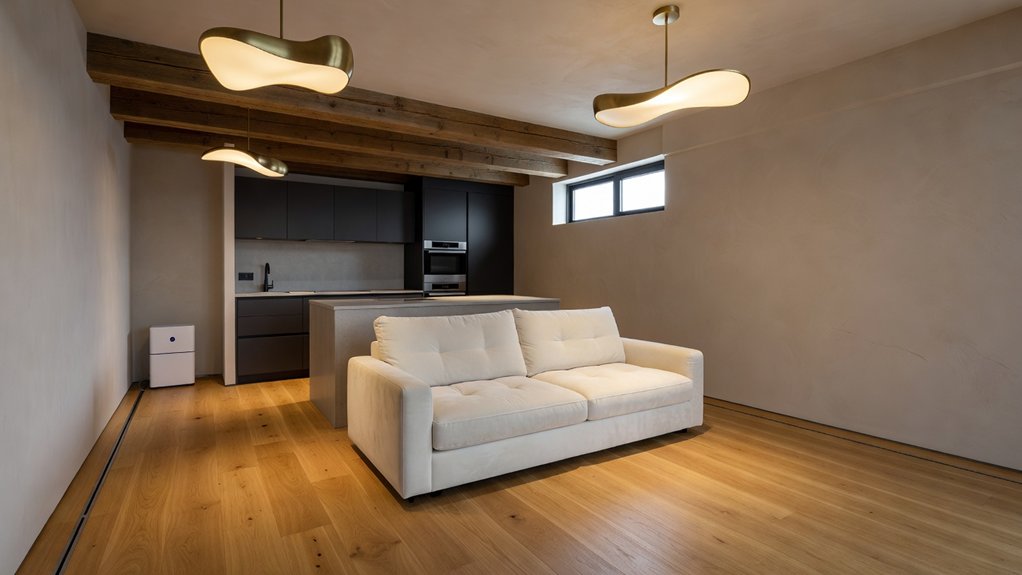
Before choosing finishes or installing insulation, identify and correct every source of basement moisture. Inspect foundation walls, floor joints, plumbing, and window wells for leaks, staining, or efflorescence.
Check gutters and downspouts; direct discharge away from the foundation, and correct grading that slopes toward the house.
Seal cracks with materials suited to their size and movement, but don’t treat active water intrusion as a cosmetic defect. If water enters after storms, consult a qualified waterproofing professional about drainage and sump options.
Measure humidity and look for condensation on cool surfaces. Ventilation improvements can reduce damp air, but don’t rely on fans to solve leaks.
Choose vapor barrier installation only after diagnosing moisture paths and confirming the assembly can dry safely. Retest conditions before enclosing walls, and document repairs for your contractor.
Plan a More Livable Basement Layout
Once the basement is dry, map the layout around how you’ll use the space and the limits of its structure. Measure the room, note support posts, low ceilings, mechanical equipment, and access points, then keep required service clearances unobstructed. Place high-use functions near convenient entrances and group plumbing-dependent areas close to existing lines to control costs.
Use Space zoning to separate activities without adding walls that restrict circulation. Define a lounge, work area, or guest zone with rugs, shelving, or changes in floor finish.
Plan Furniture arrangement around clear walking routes, door swings, and comfortable reach distances. Choose appropriately scaled pieces; bulky furniture can narrow paths and make a low-ceilinged room feel cramped. Check dimensions on a scaled plan before buying, and preserve access to storage, shutoffs, and equipment for maintenance.
Keep the layout adaptable for changing household needs.
Brighten Your Basement With Layered Lighting
Because basement windows often provide limited daylight, plan lighting in layers: ambient fixtures for overall illumination, task lights for reading or work, and accent lights to highlight architectural details.
Choose recessed LEDs or low-profile ceiling fixtures to distribute light evenly without reducing headroom. Add adjustable task lamps beside seating, desks, and counters, positioning them to limit glare on screens and work surfaces.
Use ambient accents, such as wall washers or concealed LED strips, to brighten corners and draw attention to built-ins, beams, or artwork. Select dimmable controls so you can adjust each layer independently for different activities and times of day.
Install statement fixtures where ceiling height allows, and check that every fitting suits the basement’s moisture rating. A lighting plan with separate circuits gives you precise control and consistent coverage throughout the space.
Choose Warm Finishes for a Luxury Basement
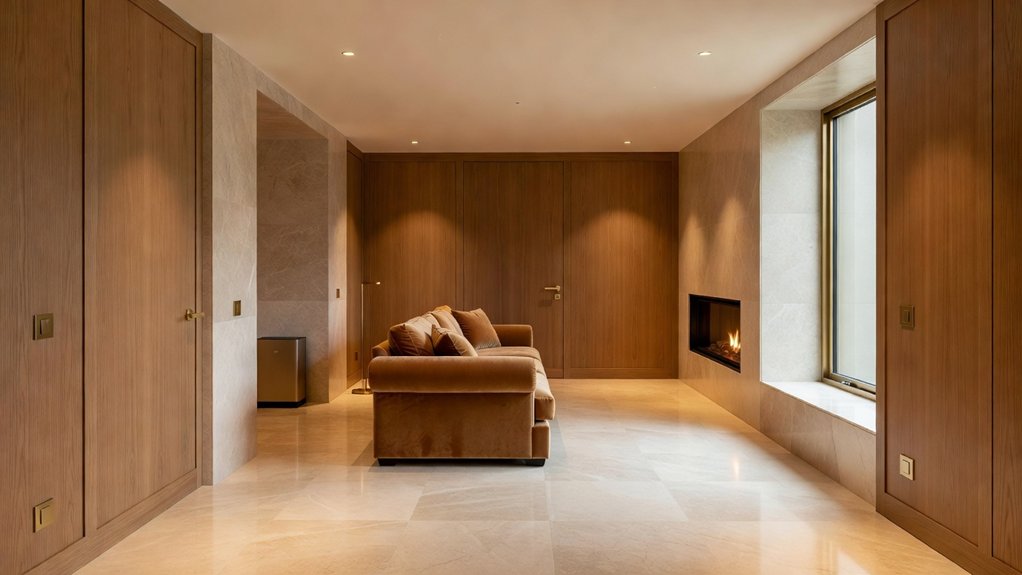
Warm finishes make a basement feel inviting and refined without relying on daylight. Choose warm color palettes—such as clay, muted ochre, mushroom, and soft taupe—to counter cool concrete and make the room feel more balanced. Test paint samples under your installed lighting; basement bulbs can shift undertones, so check colors at different times and from several angles.
Select luxury finishes that handle below-grade conditions. Use porcelain tile or engineered flooring rated for basements, and verify that the subfloor system manages moisture.
For walls, choose washable, low-sheen paint over properly sealed drywall; avoid untreated wood or paper-backed materials where humidity may collect.
Coordinate metal hardware and stone surfaces in restrained warm tones to create a cohesive finish. Before installation, measure moisture levels and resolve leaks or condensation. These choices give you a polished, durable foundation without adding unnecessary maintenance or visual clutter.
Add Cozy Details That Connect to Home
After choosing durable finishes, add familiar details that make the basement feel connected to the rest of your home. Repeat colors, patterns, or materials from nearby rooms so the transition feels intentional.
Choose cozy textiles, such as washable throws, area rugs, and cushion covers, to soften hard surfaces and improve comfort. Check product labels for moisture resistance, and avoid storing fabrics against exterior walls.
Layer lighting with table lamps or wall sconces that match fixtures upstairs; use warm, dimmable LEDs to support reading and relaxation.
Add homey accents, including framed family photos, books, and familiar ceramics, but keep shelves uncluttered. Select pieces that tolerate basement humidity, and use sealed frames or finishes where needed.
Finally, arrange seating around a clear path to stairs and exits, preserving safe circulation without sacrificing a welcoming feel.
Leave a Reply