
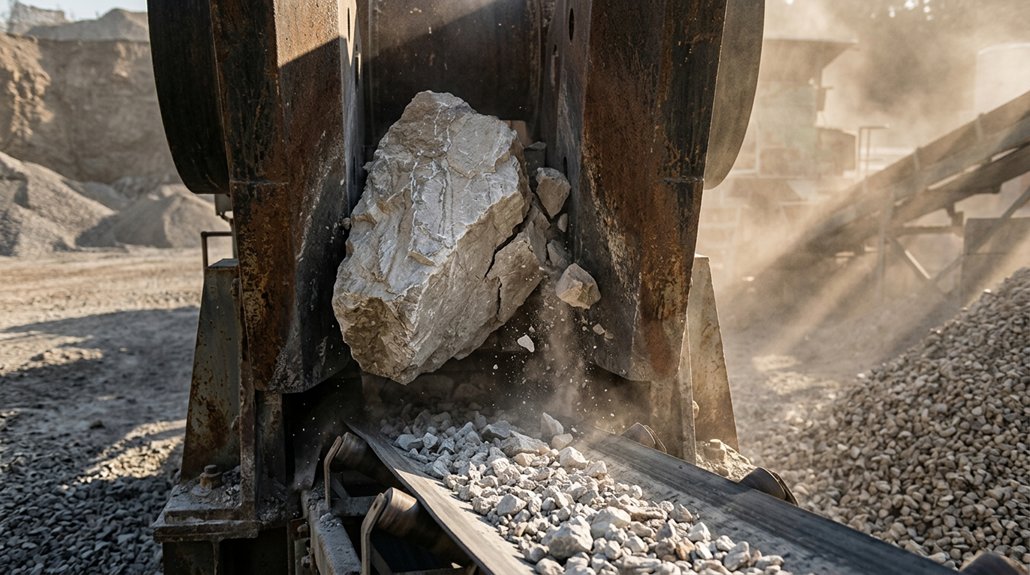
You turn blasted rock into usable aggregate by feeding it through crushers that apply compression, impact, or shear to reduce its size. Choose jaw or gyratory machines for primary crushing, then use cone or impact crushers for further reduction. Screens separate fragments into specified grades, while conveyors move each fraction onward. Oversized material can return for another pass. Match equipment to rock hardness, abrasiveness, moisture, and production targets; the stages and settings below show how to optimize the process.
How Rock Crushers Turn Stone Into Aggregate
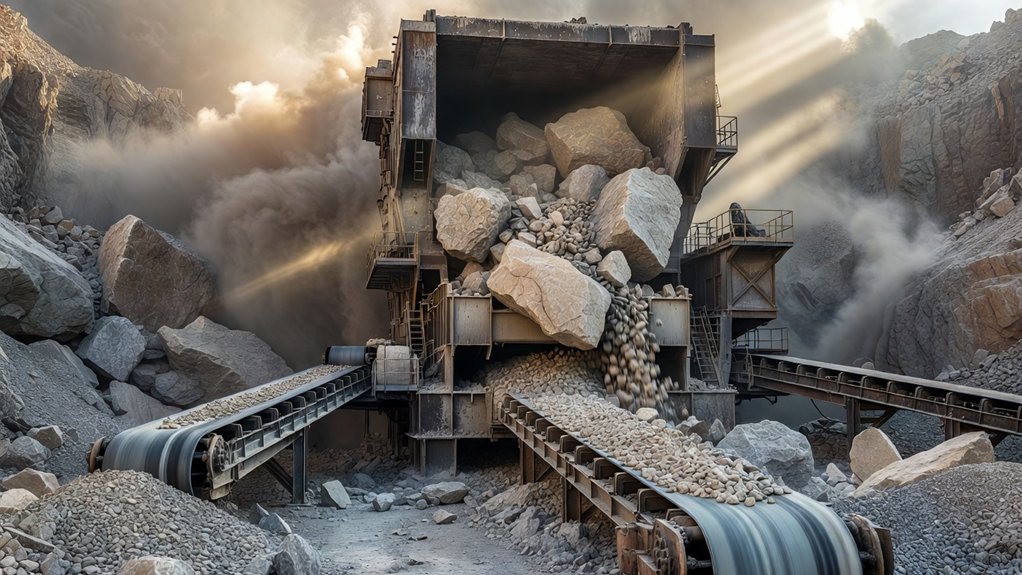
Rock crushers turn blasted or quarried stone into aggregate by applying controlled force until the material breaks into smaller pieces. You feed rock into the machine, where crushing surfaces compress, impact, or shear it. The resulting fragments pass through openings that help control their size. Screens then separate material into specified grades; oversized pieces may return for further crushing.
You’ll get better results when you match the process to the stone’s hardness, moisture, and rock durability. These properties affect throughput, wear, and the consistency of the finished aggregate.
Adjust feed rate and screen settings to meet project specifications without overprocessing material. Inspect the product regularly, and remove contaminants before they compromise quality.
Efficient crushing machinery also limits wasted energy and unnecessary handling, reducing operating costs and environmental impact while producing aggregate suitable for construction applications.
The Main Types of Rock Crushers
Choosing among the main types of rock crushers depends on the material, required product size, and production rate.
Jaw crushers use opposing plates to break hard, abrasive rock and often suit primary duties. Gyratory crushers handle high capacities in large operations, while cone crushers provide controlled reduction for secondary or tertiary applications.
Impact crushers use rapid blows to process softer, less abrasive material and can produce well-shaped aggregate.
Each design brings distinct trade-offs in capacity, feed size, product shape, and operating cost.
To protect rock crusher efficiency, match the machine to your feed characteristics and target output rather than selecting by capacity alone.
Consider available power, site layout, wear-part access, and maintenance considerations before purchase.
Your choice should meet production goals while fitting the material, crew, and service resources you actually have.
How Rock Crushers Handle Each Crushing Stage
As material moves through a crushing circuit, each stage reduces it toward the target size. In primary crushing, you feed large, blasted rock into a jaw or gyratory crusher. Its powerful compression breaks the feed into manageable pieces.
Secondary crushers, often cone or impact machines, reduce those pieces further and refine the product. Tertiary crushing delivers finer aggregate when your specifications require it; settings and crusher type determine the final gradation.
You’ll get consistent results by matching feed size, hardness, and moisture to each machine’s capacity. Adjust the closed-side setting to control output, and avoid overloading, which can cause uneven wear or downtime.
Regular rock crusher maintenance—inspecting liners, bearings, and lubrication—protects performance and extends service life. Dust suppression and efficient energy use also help limit environmental impacts across the circuit.
How Screens and Conveyors Sort Aggregate

After crushing, screens separate aggregate by size while conveyors move each fraction to the next stage or a stockpile. A vibrating screen passes smaller particles through its openings and carries oversize material forward for further processing.
You can adjust the deck angle, vibration, and feed rate to maintain sifting efficiency and prevent blinding, when particles clog the openings. Choose screen media openings that match your required size cuts, and keep the feed evenly distributed across the deck.
Conveyors then carry each fraction along a controlled route. Set transfer points and belt speed to limit spillage, dust, and material segregation during transport.
Inspect belts, rollers, and screen panels regularly; worn components can disrupt flow and compromise sizing. Clear blockages promptly, and keep stockpiles separated so finished aggregate stays within its specified gradation.
Choosing a Rock Crusher for Your Material
Which crusher suits your operation depends on the material’s hardness, abrasiveness, moisture, and feed size, as well as the product gradation you need. Match the machine to those conditions before comparing capacity or purchase price.
Use jaw crushers for primary reduction of large, hard feed; choose cone crushers for consistent secondary or tertiary crushing of abrasive rock.
Impact crushers suit softer, less abrasive material when you need shaped aggregate, but high silica can accelerate wear.
If your feed contains clay or arrives wet, assess clogging risks and consider equipment designed for easier clearing.
Check the required reduction ratio and downstream screen sizes to avoid over-crushing.
Material durability affects wear-part life, while crusher maintenance needs influence uptime and operating cost.
Confirm the supplier’s specifications against your actual feed and production targets.
Leave a Reply