
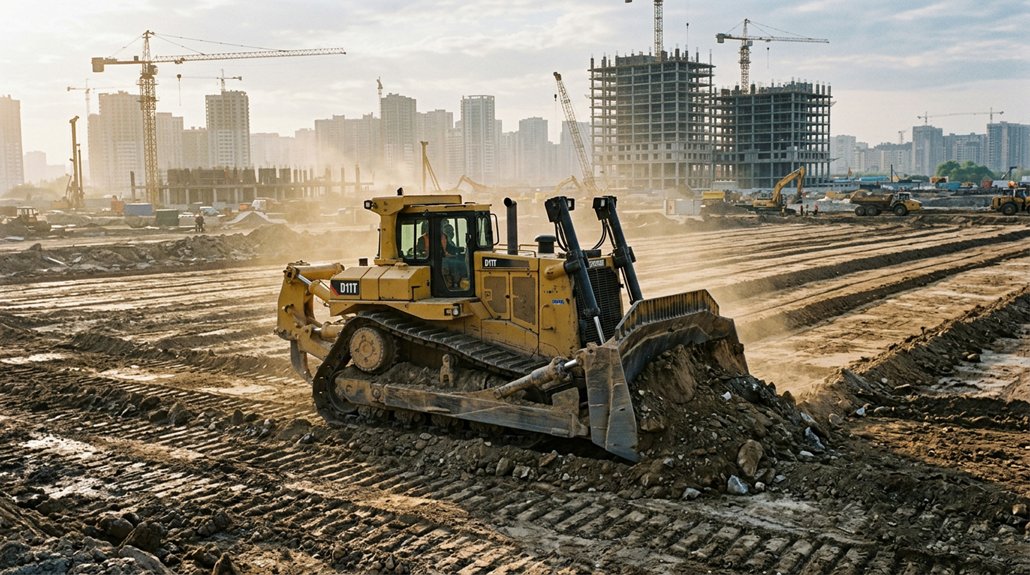
Bulldozers shape foundations by turning rough ground into a clear, graded base ready for construction. You’ll first assess soil, drainage, utilities, and access, then clear vegetation and unsuitable material while protecting hazards. Controlled blade passes cut high spots and fill low areas; operators adjust blade angle, speed, and depth to suit soil conditions. Survey checks and compaction tests help you achieve a stable, level pad. The right blades and coordinated machines make each stage more efficient, as the next steps explain.
From Rough Ground to a Clear Site
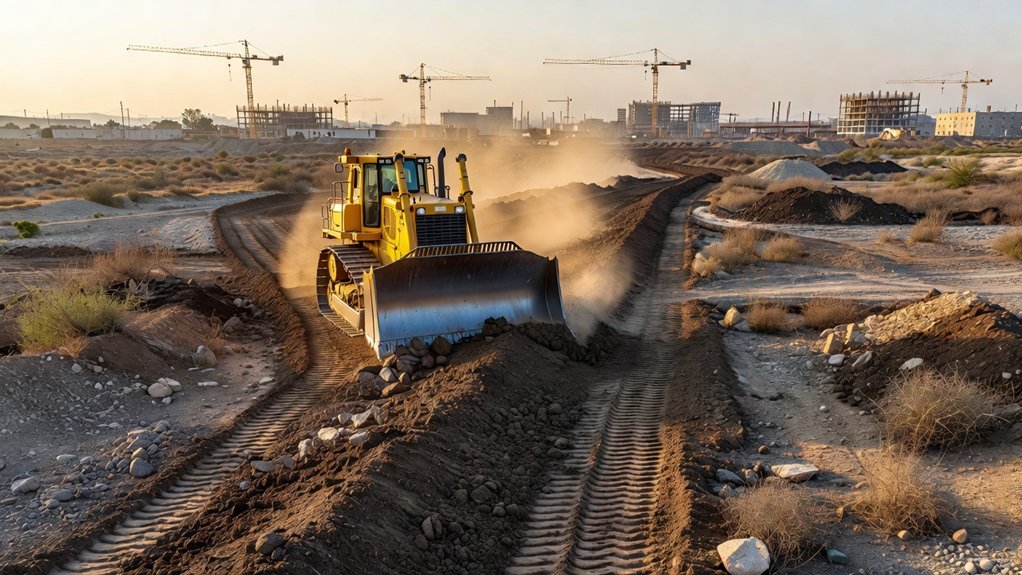
Before foundation work can begin, the site must be stable, accessible, and free of obstructions. During Site preparation, you’ll assess grades, soil conditions, drainage paths, and access routes before choosing the right bulldozer and blade. A planned sequence helps you control material movement, protect designated areas, and avoid creating soft spots that could complicate later foundation work.
You’ll also coordinate survey markers and utility locations with the project team, since disturbing either can cause costly delays. Match machine weight and track configuration to ground conditions; excessive pressure can compact soil that should remain suitable for later work.
Check weather forecasts and establish safe travel routes, especially on wet or sloped ground. Consistent equipment maintenance matters, too: inspect tracks, cutting edges, hydraulics, and fluid levels before each shift. These checks help you maintain predictable performance and keep the prepared site ready for the next construction phase.
How Do Bulldozers Clear Construction Sites?
Once the site plan and utility locations are confirmed, bulldozers clear construction sites by pushing vegetation, debris, and unsuitable surface material into designated areas for removal or processing. You’ll get safer, faster results when operators work in controlled passes and keep clear of marked utilities, protected trees, and unstable ground.
A blade can gather brush and loose rubble, while a ripper can loosen rooted growth or compacted surface debris for easier handling. Crews sort materials as they go, separating reusable topsoil, recyclable waste, and material that requires disposal.
Good Dump truck coordination keeps haul routes open and prevents piles from blocking access. Pairing dozers with excavators improves Excavator efficiency: excavators can load sorted debris while bulldozers maintain a steady supply.
You’ll finish with a clean, accessible work area.
How Do They Move and Grade Soil?
After clearing the site, bulldozer operators move soil with controlled blade passes, cutting high spots and pushing material into low areas or designated fill zones. You’ll get better results when you match blade angle, machine speed, and pass depth to the soil type.
For cohesive clay, shallow cuts reduce blade resistance; loose sand often moves efficiently in longer pushes. Effective excavation techniques also account for moisture, which affects traction and soil flow.
Avoid overloading the blade: shorter, controlled pushes limit track slip and keep material moving predictably. As you work, watch for buried utilities, unsuitable material, and changing ground conditions, and adjust your route accordingly.
Keep cutting edges sharp and tracks properly tensioned through routine bulldozer maintenance; worn components waste power and make grading less precise. These passes shape the ground, but don’t establish a finished pad.
How Do Bulldozers Build a Level, Stable Pad?
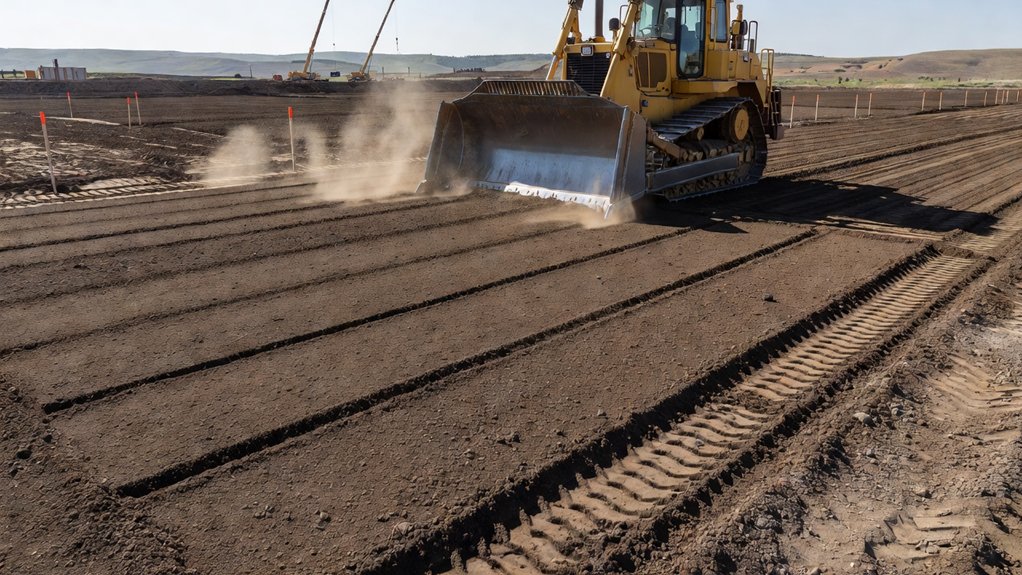
Shaping the ground is only the start; a stable pad also needs consistent elevation, proper compaction, and suitable drainage. You’ll establish target grades from survey stakes or digital layout data, then make controlled passes to bring the surface within tolerance. Check elevations across the pad rather than relying on visual judgment; small high or low spots can affect foundations and drainage.
Next, assess the material and moisture. Soil compaction depends on soil type, water content, and lift thickness, so you’ll coordinate passes with testing results and adjust the work when conditions change. Don’t compact unsuitable or overly wet material into place; remove, dry, or replace it as specifications require.
Keep slopes and drainage paths clear so water won’t collect beneath the pad. Maintain equipment safety with stable travel routes, clear communication, and awareness of workers and edges. Recheck grades and density before construction begins.
How Blade Choices and Other Machines Shape the Site
Blade selection determines how efficiently you move soil and control the site’s shape. Use a straight blade for precise grading and short pushes, or choose a universal blade to carry larger loads over longer distances. A semi-universal blade balances capacity with control when you’re cutting and spreading mixed material. Match blade width and angle to the terrain, soil type, and required finish; poor choices increase fuel use and leave uneven grades.
Other machines refine the work. Scrapers haul bulk soil, excavators dig drainage runs, and graders establish final slopes. Coordinate their passes with bulldozer routes to limit rehandling and protect the compacted subgrade.
Before each shift, check cutting edges, tracks, and hydraulic systems as part of machine maintenance. Follow safety protocols, maintain clear communication, and keep workers outside equipment swing and travel zones.
Leave a Reply