

On modern building sites, you rely on excavators and bulldozers to dig, rip, spread, and grade earth, while cranes lift materials within verified load-chart limits. Loaders and haulers keep aggregate and soil moving along clear, separated routes. Batching plants, mixers, pumps, vibrators, and screeds help you produce and place concrete to specification. GNSS-guided machine control improves grading precision and reduces repeat passes. The sections ahead explain how to select, operate, and coordinate these machines effectively.
Excavators and Bulldozers Move Construction Earth
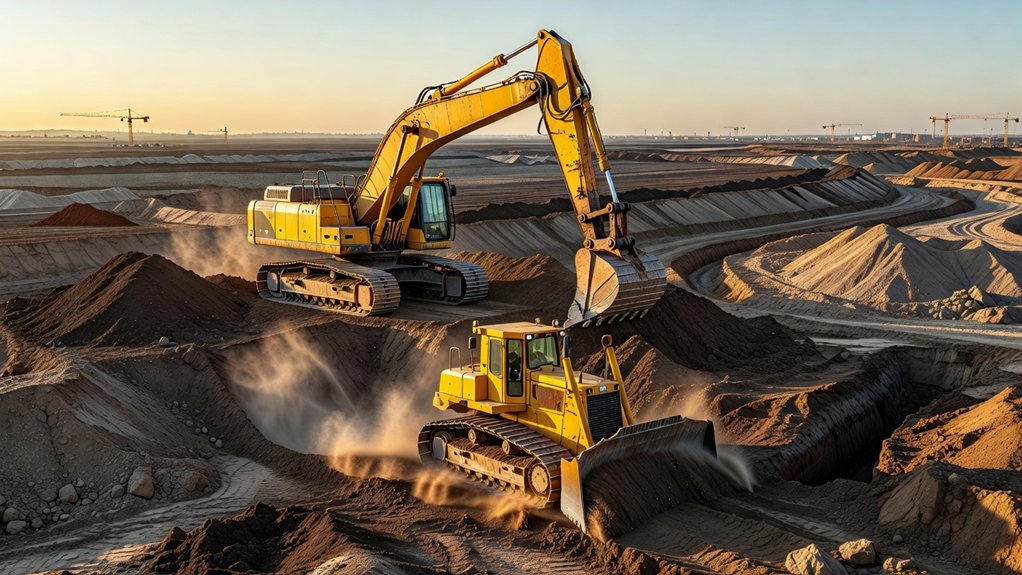
Excavators and bulldozers handle the earthmoving work that prepares a construction site for building. You use excavators to dig foundations, trenches, and drainage runs, selecting bucket size and tooth configuration to match soil conditions. Their hydraulic booms provide precise reach, while tracked undercarriages improve stability on uneven ground.
Bulldozers push, spread, and level soil with front-mounted blades. You can fit ripper attachments to break compacted ground before grading, then use GPS machine control to achieve design elevations efficiently. Together, this Heavy machinery fleet supports cut-and-fill operations, site access, and subgrade preparation.
Before work begins, you should verify ground-bearing capacity, locate buried utilities, and establish exclusion zones. Follow safety protocols for reversing, blind spots, slope limits, and equipment inspections.
Clear communication between operators and ground crews helps prevent strikes and keeps earthmoving productive.
Cranes Lift Construction Materials Safely
When materials must reach elevated or obstructed work areas, cranes lift them with controlled hoisting and precise positioning. You’ll select a tower, mobile, or crawler crane based on site access, lift radius, capacity, and ground conditions.
Before each pick, verify the load’s weight, center of gravity, rigging arrangement, and the crane’s load chart limits.
Safety protocols should define exclusion zones, communication signals, weather thresholds, and procedures for suspended loads.
You’ll also need qualified riggers to inspect slings, shackles, and hooks, then secure the load against shifting.
Operator training helps the crane operator coordinate smoothly with the signal person, manage boom movement, and respond to changing conditions.
Use outriggers or mats where specified, monitor wind and clearance, and never exceed rated capacity.
These controls protect crews, equipment, and structures during every lift.
Loaders and Haulers Move Site Materials
On active jobsites, loaders and haulers work together to move soil, aggregate, and debris efficiently. Your wheel loader or track loader scoops material with a bucket, then loads articulated dump trucks or site haulers positioned for quick cycles. Match bucket capacity to truck payload, haul distance, and ground conditions to avoid overloading and wasted trips.
Keep travel routes firm, graded, and clear; separate equipment paths from pedestrian zones to strengthen Site safety. Operators should use agreed signals, maintain visibility, and avoid backing whenever practical.
You’ll improve production by coordinating loading points, haul routes, and dump locations as site conditions change. Check tires, brakes, hydraulics, cutting edges, and backup alarms during equipment maintenance routines. Timely inspections catch wear early, reduce downtime, and help your fleet move material reliably throughout each shift.
Concrete Machines Mix, Pump, and Place Concrete
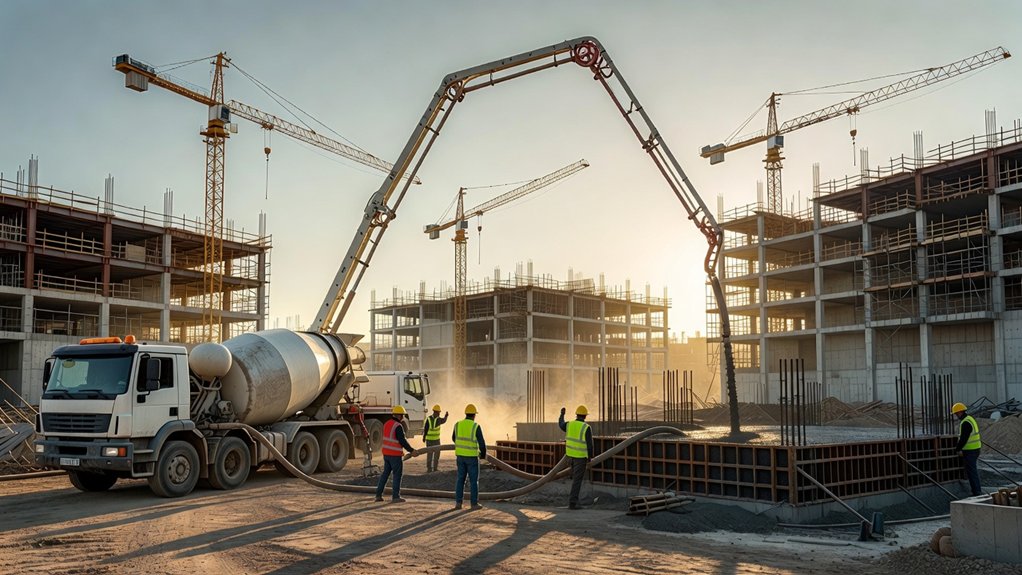
Concrete machines coordinate batching, transport, pumping, and placement to deliver a consistent mix where crews need it. With Concrete batching, you control aggregate, cement, water, and admixture proportions to meet the specified mix design.
Drum or twin-shaft mixers apply suitable mixing techniques to achieve uniformity without overworking the material. Transit mixers keep concrete moving during delivery, while agitators help maintain consistency on longer hauls.
At the pour, truck-mounted boom pumps reach elevated decks and congested forms; line pumps handle smaller placements through flexible hoses. You’ll match pump capacity, line diameter, and slump to the pour rate and aggregate size, reducing blockages and cold joints.
Crews then place, consolidate, and finish the concrete using vibrators and screeds, protecting structural integrity and surface quality across foundations, slabs, and walls.
Automation Makes Construction Equipment More Precise
Automation helps construction equipment work to tighter tolerances with less rework. With automated controls, you can guide dozers, graders, and excavators using GNSS positioning, machine sensors, and digital design files.
The system compares the cutting edge or bucket position with the target grade, then adjusts blade height or boom movement as you work. This robotic precision helps you hold elevations, slopes, and trench lines consistently across a site, even when conditions change.
You’ll still need skilled operators to verify data, manage machine response, and account for soil movement or obstacles. Calibration matters: check sensors, confirm the site model, and keep positioning equipment aligned.
Automation can also reduce survey stakes and repeated passes, saving fuel and machine hours. By pairing operator judgment with precise guidance, you can improve production quality without surrendering control.
Leave a Reply